
What is an auto-battler? A beginner's guide
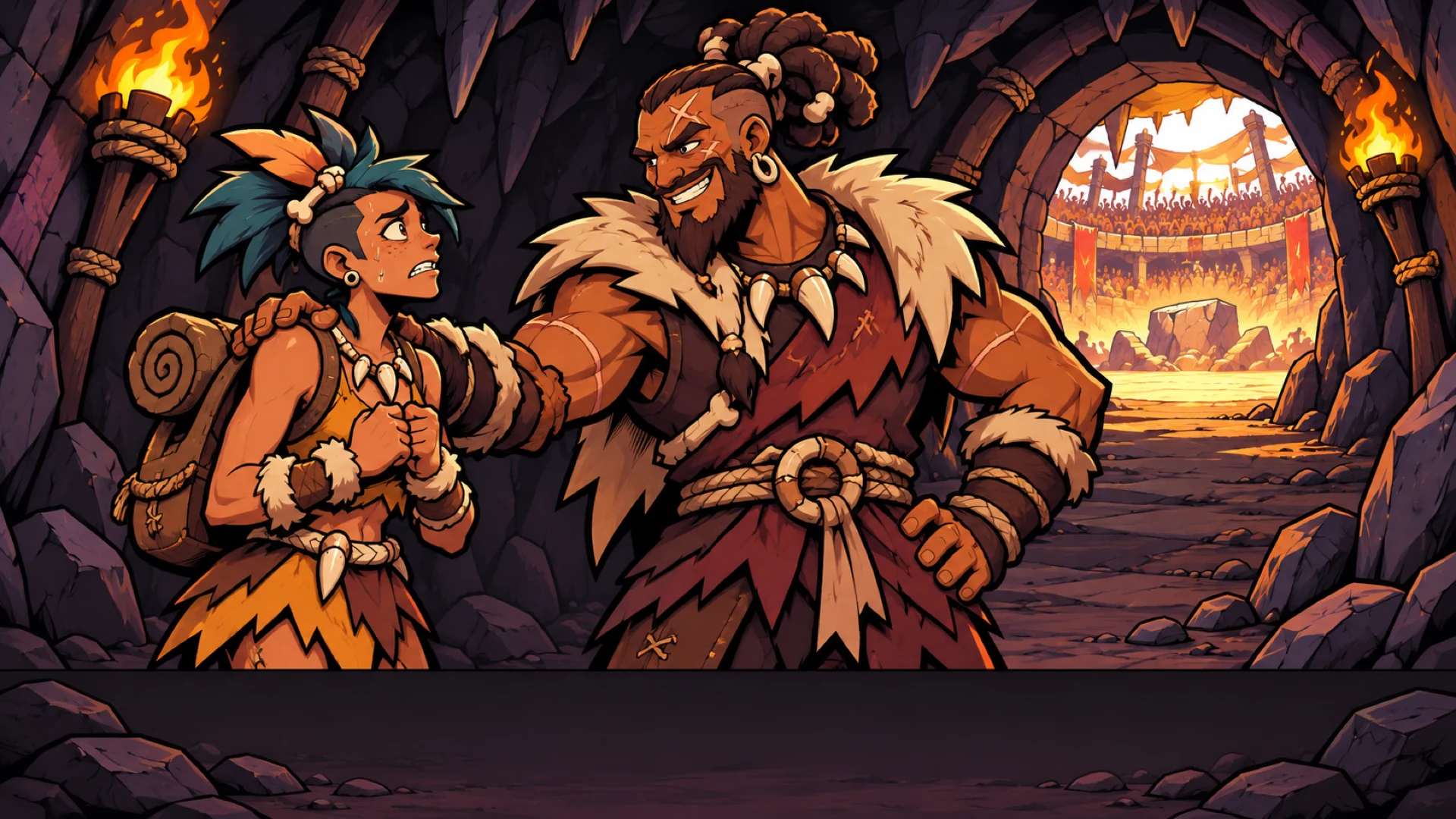
Somewhere around 2019 a strange kind of strategy game took over: one where the most exciting part, the fight, is the part you do not play. You buy some units, put them on a board, and then you sit on your hands while they sort it out. People who had never touched a strategy game were suddenly arguing about positioning.
That is an auto-battler. This guide explains what the genre is, where it came from, the three main shapes it takes today, and how to pick one if you have never played any.
The definition in one paragraph
An auto-battler is a game split into two phases that repeat. In the preparation phase you make decisions: which fighters to field, what to equip, where to place them, what to upgrade. In the combat phase the game resolves the fight without you. Your fighters choose their own targets, use their own abilities and win or lose according to rules you cannot interrupt. Then you see what happened and prepare again.
Everything interesting follows from that split. Because you cannot fix a mistake mid-fight, the skill is in reading the rules well enough to predict what your build will do. Because you do not need fast hands, a turn can last thirty seconds or thirty minutes, and the game works just as well on a phone on a bus.
A short history
The idea is older than the name. In 2008 a French studio, Motion Twin, released La Brute, a browser game known in English as My Brute. You created a little fighter, sent it against other players’ fighters a few times a day, and watched an animated brawl that you could not influence. Each level-up gave a random reward: a stat, a weapon, a skill, sometimes a pet. It was closer to raising a creature than to commanding an army, and a great many people played it in a browser tab at work.
The word “auto-battler” arrived in January 2019 with Dota Auto Chess, a custom map made inside Dota 2 by Drodo Studio. Eight players each bought heroes from a shared pool, placed them on a chessboard and fought each other in pairs, round after round, until one remained. Within months there were official versions from the biggest publishers: Riot’s Teamfight Tactics, Valve’s Dota Underlords, and Blizzard’s Hearthstone Battlegrounds.
Since then the genre has spread in every direction. Super Auto Pets made it asynchronous and cute. Backpack Battles turned inventory management into the board. Roguelike auto-battlers such as Despot’s Game dropped the other players entirely.
The three families
Almost every auto-battler today belongs to one of three shapes. They feel very different, so it is worth knowing which one you are looking at.
| Family | You manage | Opponents | A session lasts | Examples |
|---|---|---|---|---|
| Lobby (auto chess) | A team bought from a shared shop, on a board | 7 other live players | 25 to 40 minutes | Teamfight Tactics, Auto Chess, Hearthstone Battlegrounds |
| Asynchronous team builder | A small team or an inventory, built over a run | Stored teams of other players | 5 to 20 minutes, pausable | Super Auto Pets, Backpack Battles |
| Persistent fighter | One or a few characters that you keep and level for weeks | Stored fighters of other players | 2 to 5 minutes a day | La Brute, Cave Smash |
Lobby auto-battlers
This is the auto chess format. You share a pool of units with seven other people, so what they buy changes what you can get. You manage gold, interest and win streaks, and you look for synergies: fielding three knights or six mages unlocks a bonus. It is the deepest and most competitive family, and the most demanding. A game is a commitment, and leaving early ruins your rank.
Asynchronous team builders
Here the opponent is a snapshot. Somebody built that team earlier; you fight their ghost. That removes the clock. You can put the phone down mid-run and come back tomorrow. Runs are short, there is rarely an account to level, and every run starts from zero. If you like roguelikes, this is the comfortable way in.
Persistent fighters
The oldest family and, for years, the quietest. You do not build a new team every run: you own a fighter and it grows. Each level-up is a permanent decision, so the game is slow by design. You fight a handful of times a day, and the pleasure is in watching one character become something specific over weeks.
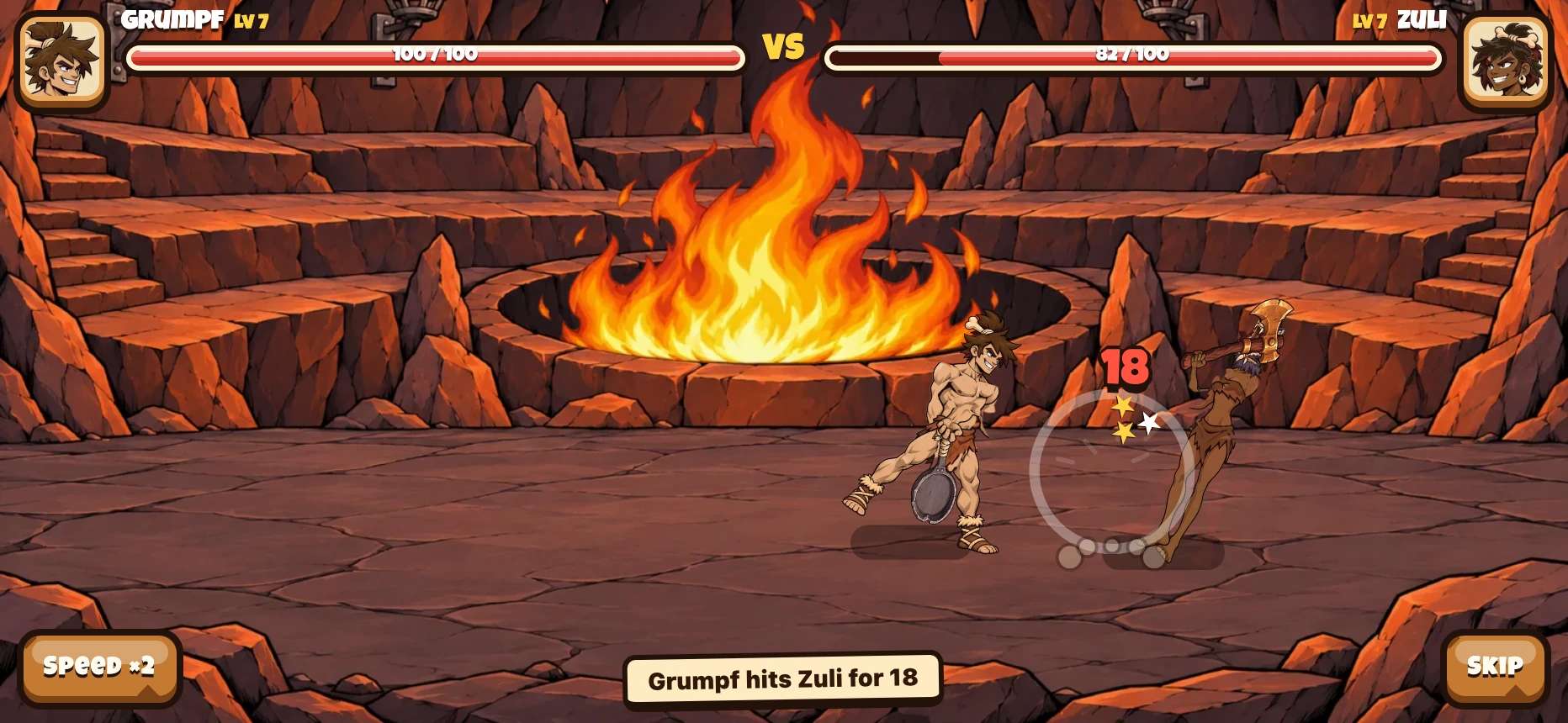
Cave Smash belongs to this third family. You raise cavemen called Smashers, and every level-up offers three random cards from which you keep one: a weapon, a piece of gear, a skill, a pet or bonus stat points. The fight is then simulated by the server and replayed as an animation.
What makes a good auto-battler
Having no control during the fight sounds like less game. In a good auto-battler it is the opposite, because of three things.
Readable rules. You can only plan around rules you can see. Good games show you why you lost: who targeted whom, which ability fired, what the dice did. Bad ones show a blur of numbers. If you cannot explain a defeat, the game is not teaching you.
Meaningful randomness. Every auto-battler has luck: the shop roll, the draft, the hit chance. Luck is fine when it gives you a problem to solve (“I was offered a spear, how do I make a spear work?”) and bad when it simply decides the winner. A useful test: do strong players win more often than weak ones over a hundred games? In well-designed games, clearly yes.
Decisions that exclude each other. If you can have everything, there is nothing to decide. The best moments in the genre are the ones where taking this means not taking that. In Cave Smash that is the draft itself: three cards, one kept, two gone for good.
How luck is kept fair
New players often ask whether auto-battlers are “just random”. They are random the way poker is random: any single hand can go against you, and the better player still wins the evening.
Designers have tools to keep it that way. Shared pools let you see what is likely to come. Pity systems guarantee a rare result after a run of bad luck. Published odds tell you what you are rolling for. Deterministic simulation means the same build against the same opponent with the same random seed always gives the same fight, so results can be checked.
Cave Smash uses several of these. The odds of each card type and rarity are shown in the game, and a Smasher that goes ten drafts without seeing an Epic or Legendary card gets a draft made only of Rare, Epic and Legendary ones. The details are on the game page.
Which one should you try first?
- You want a full competitive match and have forty minutes: a lobby game. Teamfight Tactics is the largest.
- You want something light that you can stop at any time: an asynchronous team builder. Super Auto Pets is free and friendly.
- You want a few minutes a day and a character that is yours: a persistent fighter. The original La Brute now lives on as a fan-run remake, and Cave Smash is our own take on the idea for phones, currently in development.
Whichever you choose, the habit that makes you better is the same: after every loss, find the one decision you would change. In a genre where the fight plays itself, that question is the whole game.
Quick questions
Do you control anything during the fight in an auto-battler?
Usually nothing. Some games let you trigger one ability or move a unit between rounds, but the fight itself resolves without input. That is the defining feature of the genre.
Are auto-battlers the same as idle games?
No. An idle game rewards time passing, and progress continues while you are away. An auto-battler rewards decisions: the fight is automatic, but the result depends on choices you made, and nothing happens until you start a fight.
Are auto-battlers pay-to-win?
It depends on the game. Lobby games such as Teamfight Tactics sell only cosmetics. Collection-based games can sell stronger units. Check whether anything with statistics can be bought before you invest time.
In this post:Stone Cave